Linocuts Made Simple
Linocuts Made Simple
Linocuts Made Simple
You don't need to be able to draw. You don't even need a finished picture in mind. All you need is curiosity about what a blade can do.
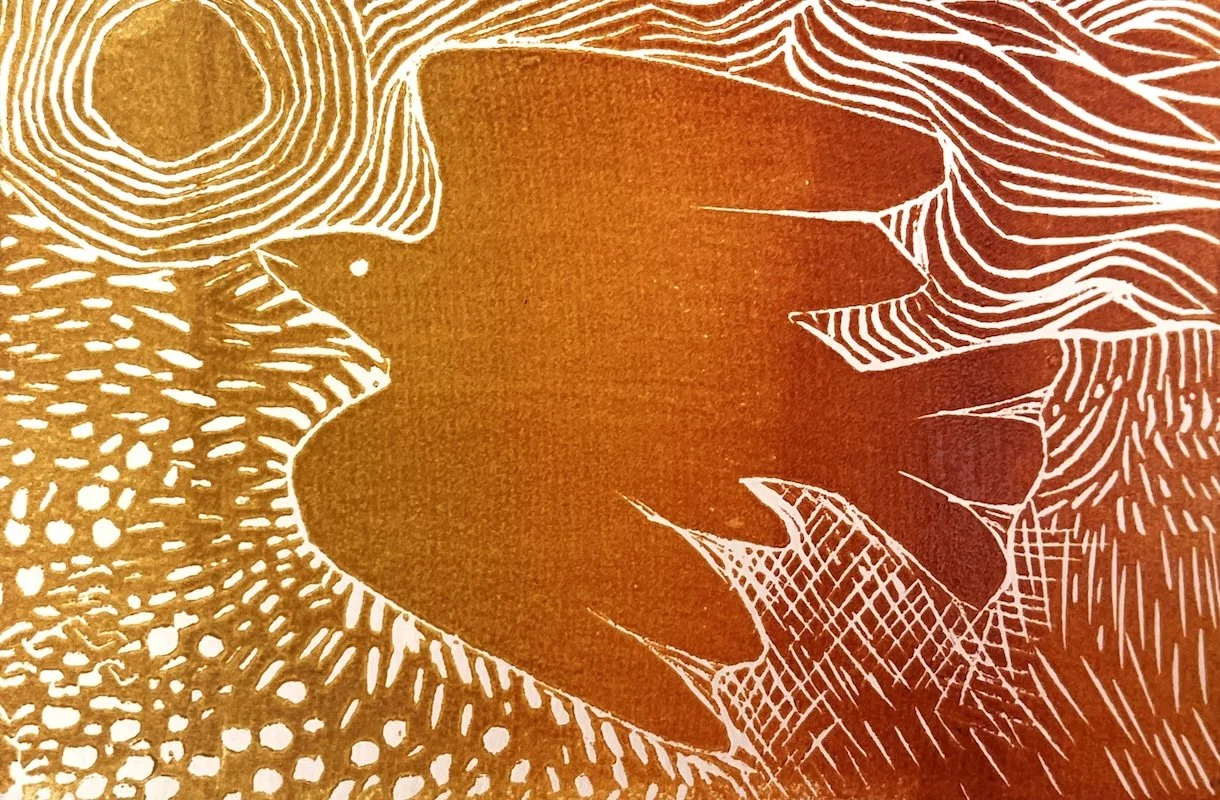
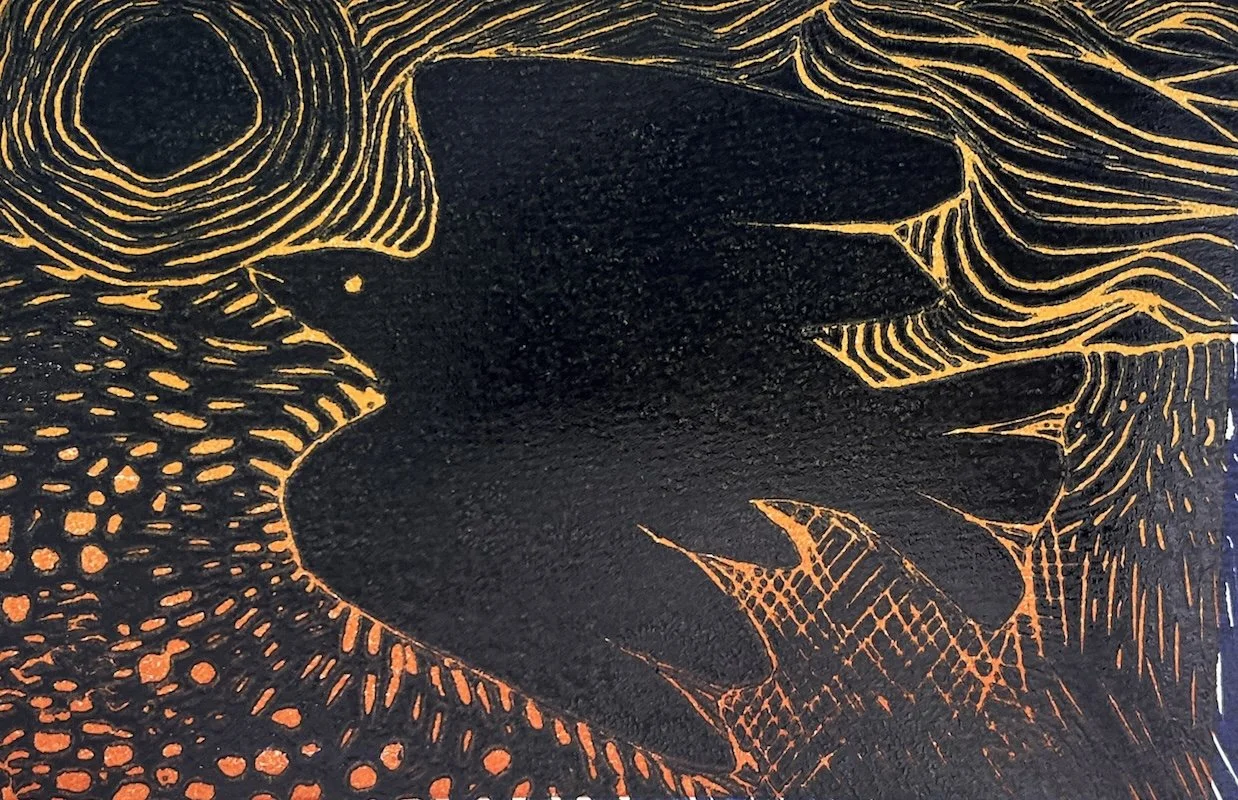
Linocut has a reputation for precision and patience — careful lines, a clear image, hours of careful cutting. This workshop takes a different route in. Instead of starting with a picture, you'll start with the tools themselves: two V-blades, two scoop blades, and one wildcard, each capable of a completely different mark. Play with them long enough, and you'll discover a whole vocabulary of pattern and texture you can call on whenever you need it — at home, in your own work, at your own pace.
Dates
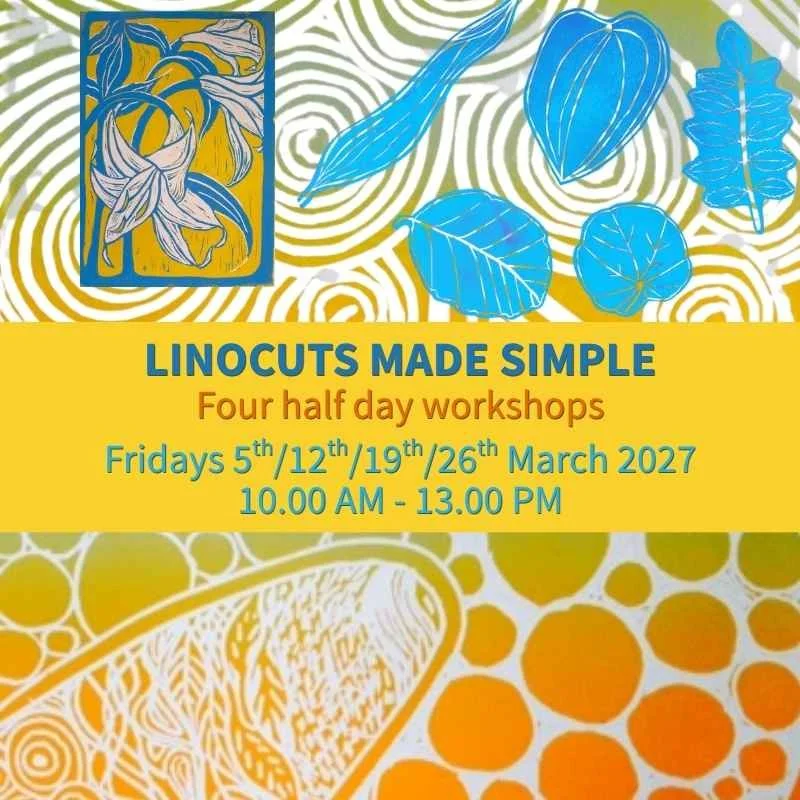
This series of half day workshops Friday mornings on:
March 5th
March 12th
March 19th
March 26th,
10:00 AM - 13:00 PM
Will you be coming on your own, or bringing a friend (or friends)?
Mailing list discount
Subscribers get 10% off if they book before December 31st 2026. Book early if you want your preferred date, as places are limited to a maximum of four. Sign up here , then email me for your discount code before booking.
If this course dates don’t suit you get in touch to discuss options.
Format
This runs as four half-day workshops, giving you time to move from mark-making into blind embossing and colour inking.
Please read the Booking and Cancellation Policy before you book.
ADDITIONAL INFORMATION
-
A hands-on introduction to linocut, built around exploration rather than a finished image. You'll try each blade in your set and see what marks, textures and patterns it naturally makes. From there, you can either keep exploring pattern for its own sake, or start bringing those marks together into a more traditional, recognisable image — whichever direction interests you.
-
The course fee covers the cost of inks and consumables including a basic paper allowance of 2-3 quarter sheets per half day.
You'll also get the chance to compare hand-burnished prints with prints made using the etching press.
See below about lino and tools
-
Linocut can be done at home with minimal equipment, which is why I wanted to offer something that didn’t require access to a studio after you have been on a course.
Many of you may already have carving tools and rollers, and others will want to try a workshop before investing. So the fee is the same for every course, and you choose what suits you:
Bring your own lino cutting tools and rollers or whatever you have. For linocut, there’ll be a small extra charge for lino, depending on what you use and any extra you’d want to take home.
Book your place and tell me what you need from the supply list I’ll send you. I can provide a starter kit:
Lino printing art gift box: approx £28 which includes:
Lino Cutter Set (2 Handles 6 Blades)
250ml Black Printing Ink Tube
Block Printing Lino Roller 60mm
2x Easy Cut Lino Block 150 x 100mm
Seawhite A5 All-Media Cartridge Paper Pad
Inking Surface
A5 Seawhite Storage Box
Or you can buy only what you need such as:
A5 lino (150 mm x 100 mm): approx £2.50 each
A5 Japanese vinyl (150 mm x 100 mm): approx £3.90 each
4” roller: approx £8 each
You pay for anything you buy from me at the end of the course from just lino or everything you need to continue. It’s yours to take home, so you can keep printing at the kitchen table.
-
Day one is focused on mark-making with your linocut blades in the morning. You will have homework to carve your plate plate at home before the next session.
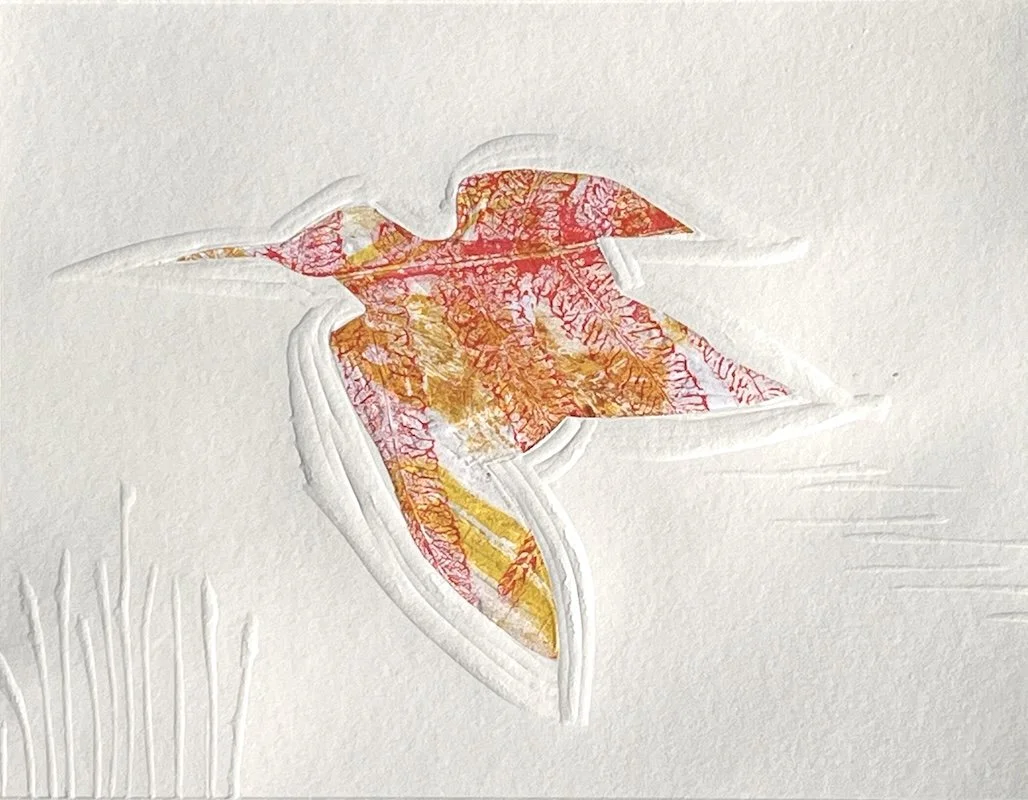
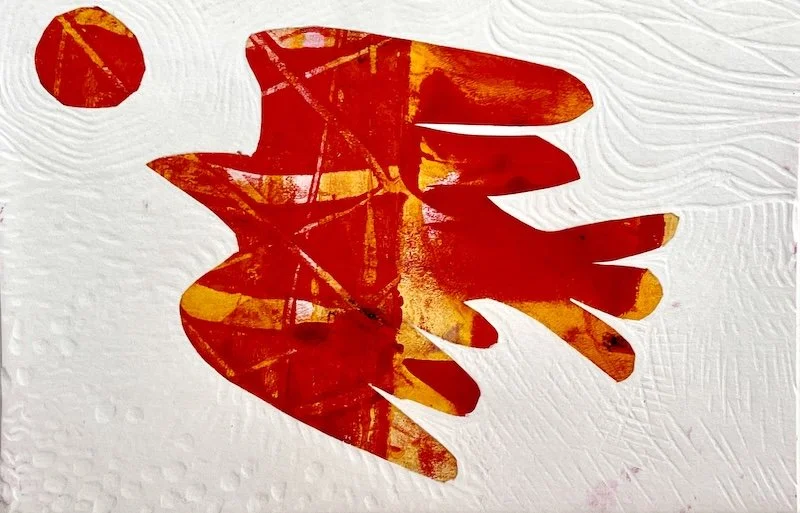
On day two, we'll start with blind embossing — printing without ink, so the paper itself carries the texture — and we’ll including some simple collage. We will then move onto printing in one colour.
Day three we will move on to ways of introducing more colour.
Day 4 will be an opportunity to continue more independently, experiment with what you have learnt with additional demonstrations as are appropriate for each individual’s progress.
-
As well as cutting into a single block, you can try making shaped plates — small cut-out forms you can use as stamps and over-print onto patterned backgrounds. It's a quick way to build up layered, textured compositions without needing to carve a large, detailed block.
-
This workshop is a foundation, not a ceiling. If linocut floats your boat a follow-up workshop or adding extra days, allows you to explore:
Collage, combining printed and cut papers into layered compositions
Reduction linocut — a technique where you cut, print, then cut away more of the same block and print again in a different colour, repeating the process so each layer builds on the last. It's a way of creating multi-coloured prints from a single piece of lino, and a natural next step once you're comfortable with the blades.
Multi-plate printing
-
One-to-one or small groups of up to 4 maximum, so there's plenty of individual attention and space to experiment.