Why My Colours Aren't Real — And Why That's The Point
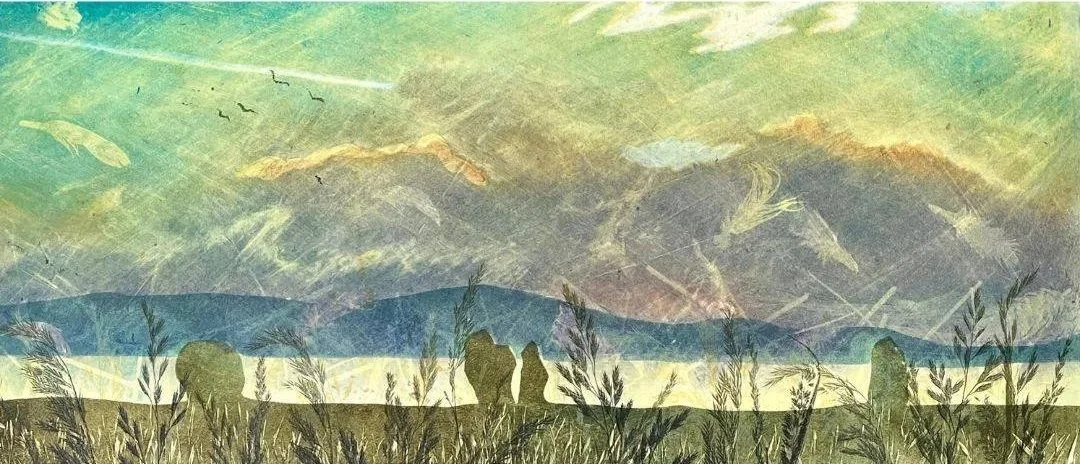
Monotype seascape of the view towards Largs from above Kilchattan Bay - The Knife Fork and Spoon standing stones
If you've ever stood in front of one of my prints and thought 'I've never seen a sky that colour' — you're right. You haven't. And that's entirely deliberate.
My work begins outdoors. I walk the same landscapes repeatedly — the coast and ancient moorland of the Isle of Bute, the wide skies, stone walls and copses on the Northumberland horizon, the edge of the Firth of Clyde where the light does something different every single day. I take photographs constantly, not to copy them, but to capture a light, the atmosphere, the feeling I want to hold onto.
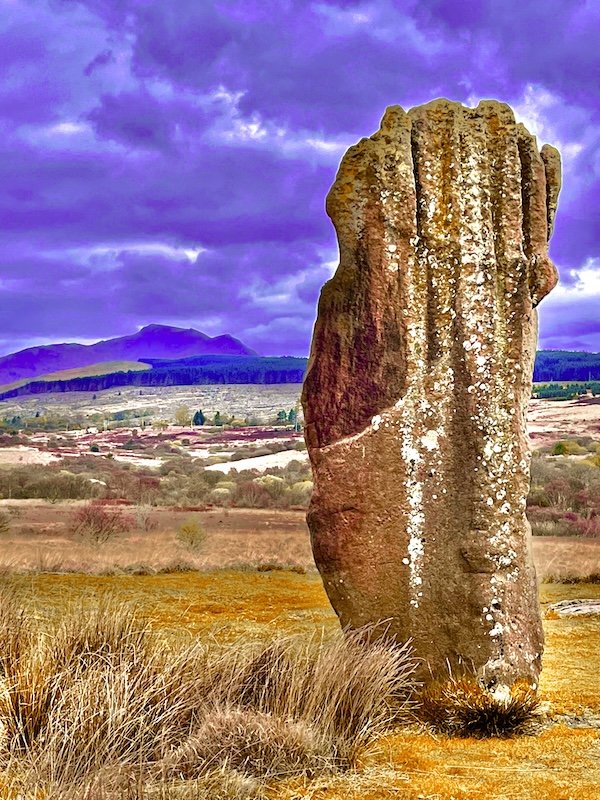
Machrie Moor Standing Stones - Isle of Arran
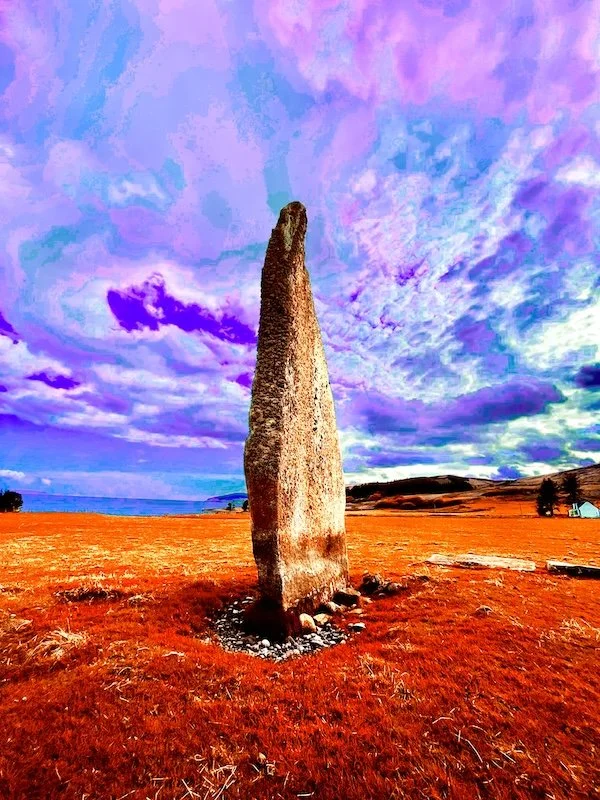
Machrie Moor Standing Stones - Isle of Arran
Then something strange happens back at my desk. Sometimes, I take those photographs into editing software to push the colours to places they were never meant to go. A grey Scottish sky becomes bruised violet. Amber moorland grass burns almost red. The hills behind a standing stone turn a deep, impossible purple.
I'm not trying to make the landscape look like something it isn't. I'm trying to make it feel like something it already is. The way I feel as I walk to a trig point on Hadrian’s Wall, or down on the Straad at St. Ninian’s as the curlews call over the standing stones with the sound of the tide coming in.
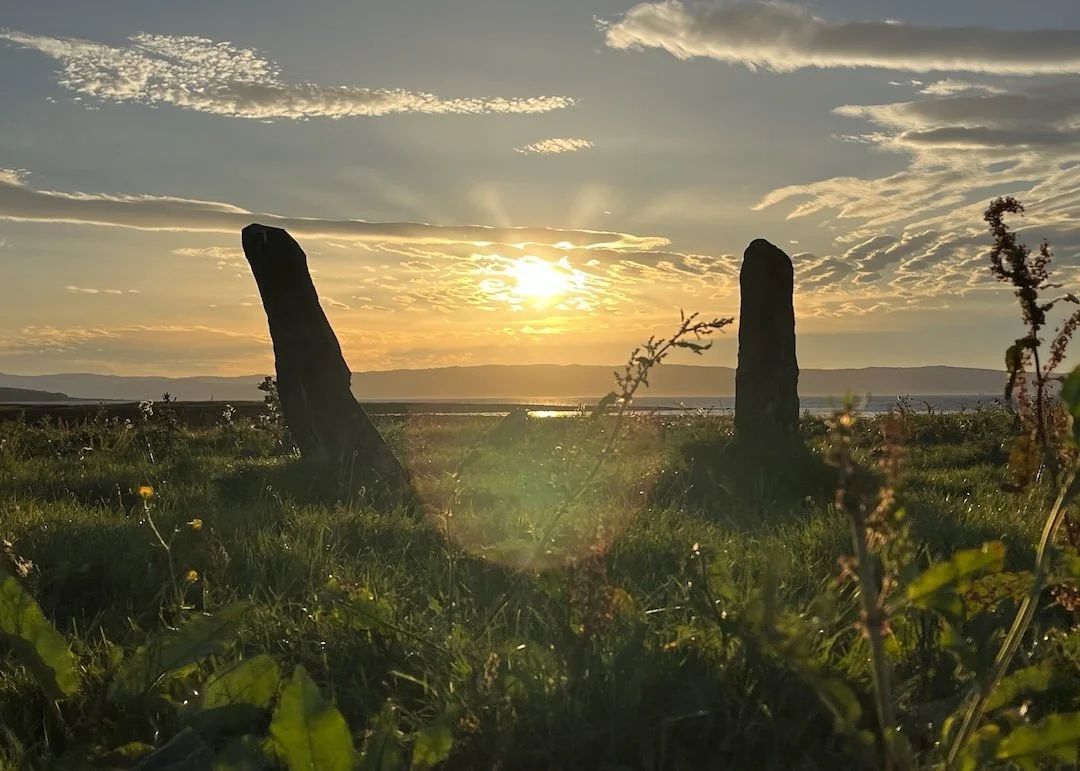
Standing Stones at St. Ninian’s Bay Isle of Bute
There's a quality to ancient places — a weight, a drama, an atmosphere that a straight photograph rarely captures. When you stand beside a standing stone that has been there for thousands of years, imagining the communities who decided to erect the stones on Arran, or carve cup and rings into the rocks below Simonside at Lordenshaw, or on a summer solstice evening, watch the sun suddenly line up with a tiny hole in a massive standing stone to shine through the rock, the sky above it feels different. More charged. More present. The colours I choose in the studio are my attempt to put that feeling on paper.
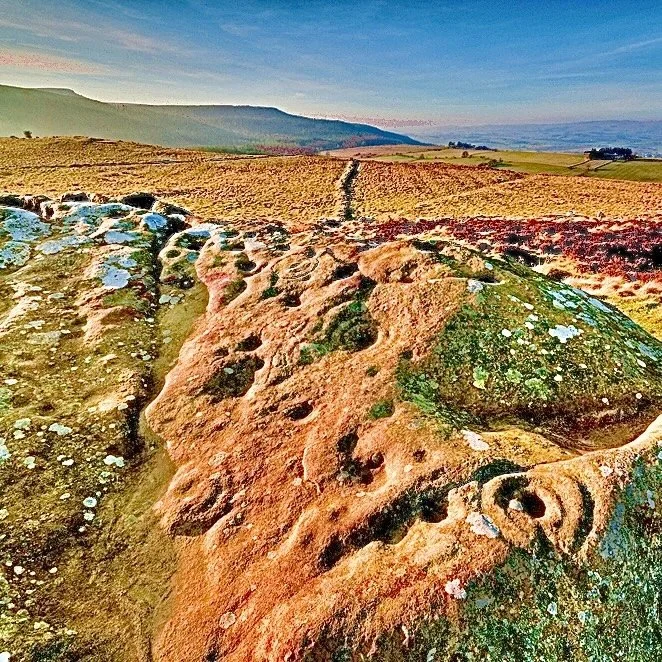
Cup and Ring Stone at Lorden Shaw Simonside
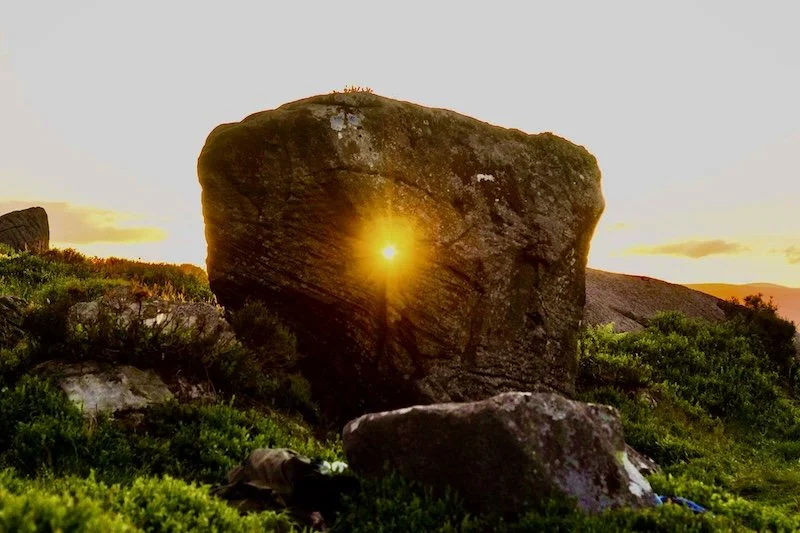
Standing Stone on the Summer Solstice below Simonside
The finished print rarely looks like the reference photograph — and it's not meant to. The collagraph and monotype processes I use add another layer of transformation. Texture builds up through the printing plate. Colour shifts between layers. Serendipity happens outside any loose plan I may have. The result is something that feels emotionally true to the place, even if it doesn't look literally accurate.
Collectors often tell me they can't explain exactly why they're drawn to a particular print. They just know it captures something they felt in a landscape — something a photograph couldn't quite hold. That's what I'm after, every time I'm in the studio.
If you'd like to see the current collection of original collagraph and monotype prints inspired by Scotland and Northumberland, you can browse them here.
I'll be releasing some brand new prints very shortly — including new versions of existing variable editions such as Lone Tree Under a Starry Sky and On The Hunt. These will be exhibited in July and August at Dennis Kilgallon Gallery at Allenbanks in Northumberland.
If you're able to come, the private view is on Saturday 4th July, 4–8pm. I'll be there.
Can't make it in person? Join my mailing list to be the first to see the new work online — and contact the gallery directly if you'd like to purchase from the exhibition which goes on until August 30th, 2026.