Printmaking Retreats for Artists — Isle of Bute Studio, Scotland

Plate 1 of the three plate collagraph print
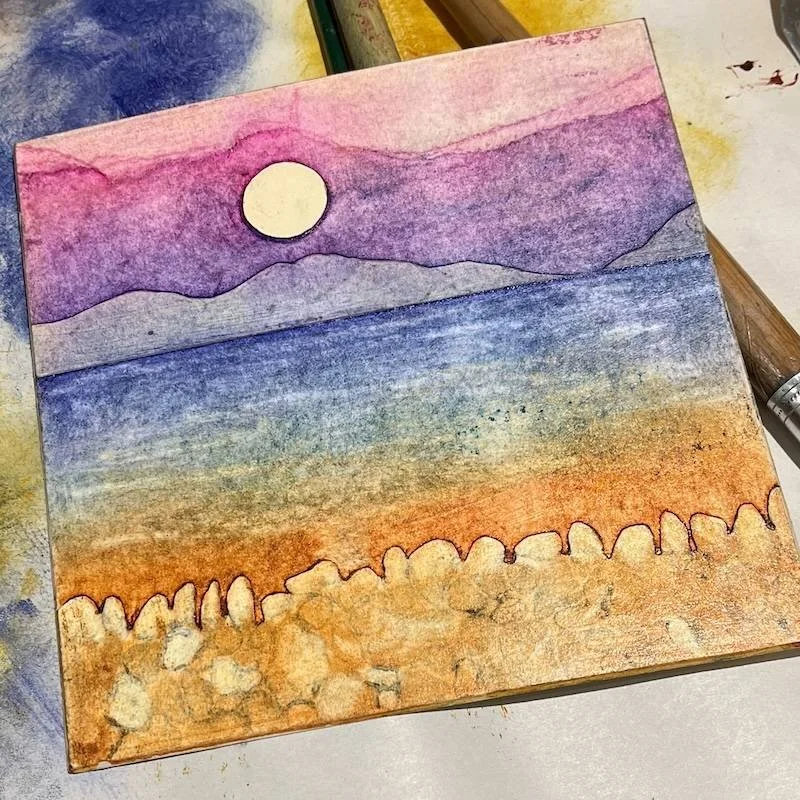
Plate 2 of the three plate collagraph print
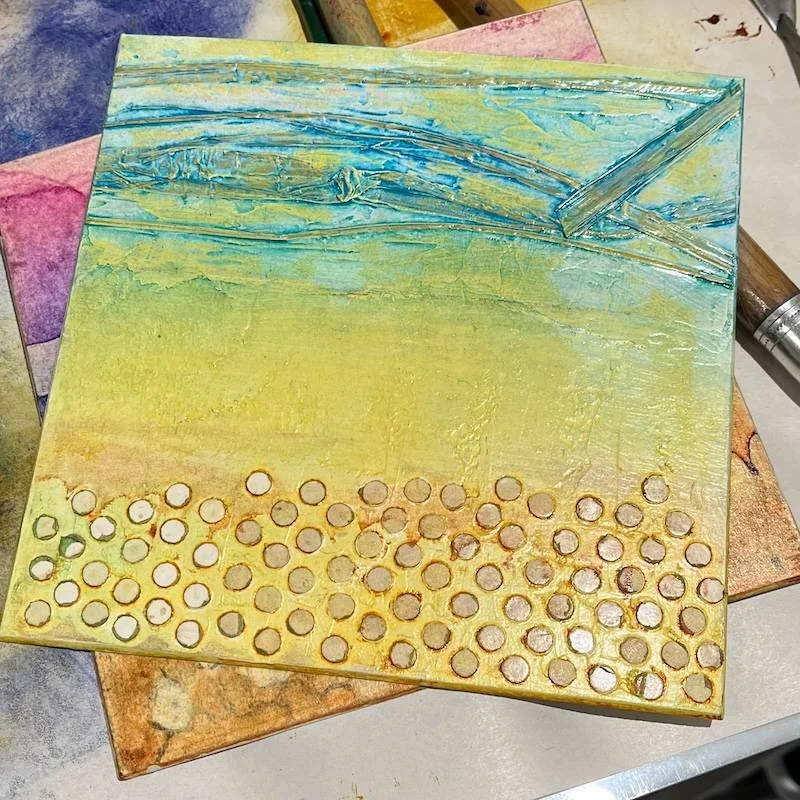
Plate 3 of the three plate collagraph print
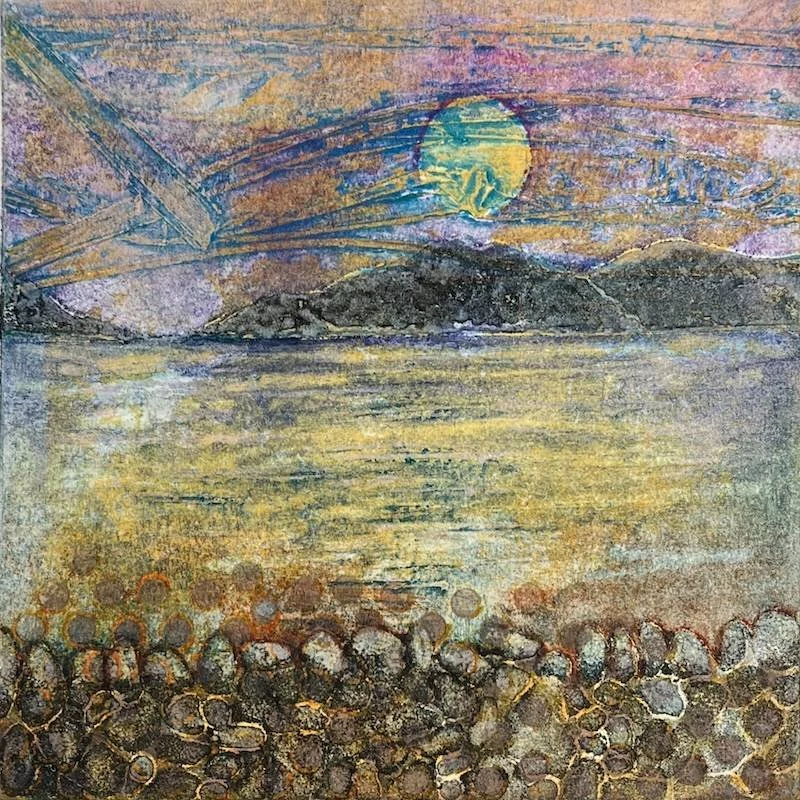
Version 1 - end result
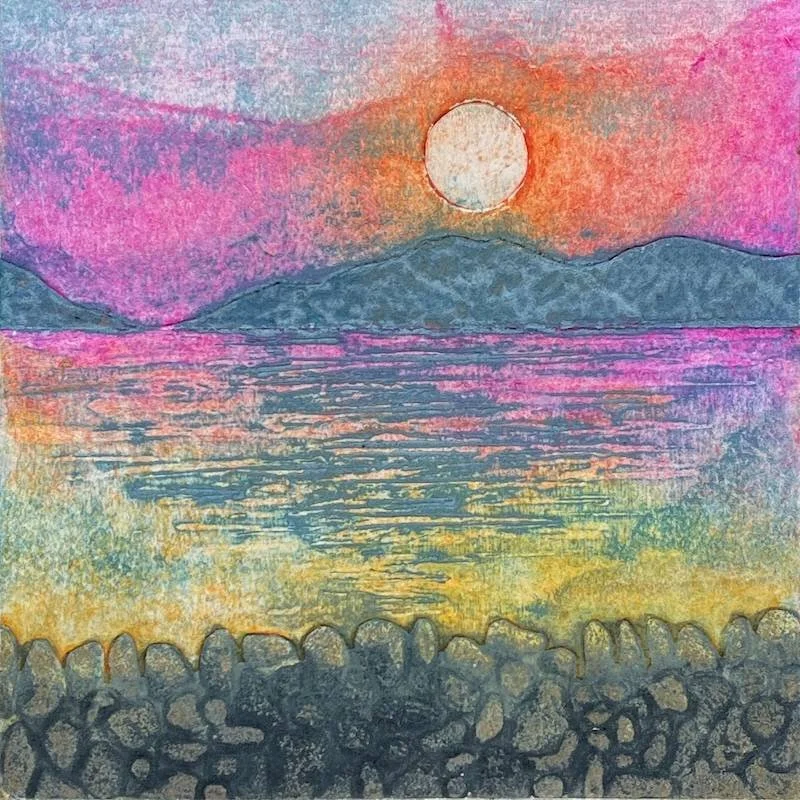
Version 2 - end result
If you already make prints, you'll know that technique isn't really the problem after a certain point. You know how to ink a plate. You have your own way of working that produces results you're proud of.
What's harder to find, once you're past the beginner stage, is a fresh perspective. Someone whose approach and habits are different from yours. A studio where things are done slightly differently, where the conversation about the work can go somewhere it hasn't gone before.
Every printmaker develops their own approach to shared techniques — the particular way you use a brayer, or apply ink to a plate; the materials or colours that you reach for; the way you mix your inks; the way you use the knowledge you’ve gathered so far; the decisions you make about when a plate is done. When I was teaching in partnership at Horsley Printmakers with Rebecca Vincent in Northumberland, we used to say that our workshops were our research and development department. That exchange of approaches, that cross-pollination of practice, produced things neither of us would have arrived at alone.
That's what I'm offering here. Not a masterclass, not a remedial session — a few days of focused, genuinely two-way creative exchange, in a studio on a Scottish island where the landscape has a habit of finding its way into the work.
“When I was teaching at Horsley Printmakers in partnership with Rebecca Vincent in Northumberland, Rebecca and I used to joke that our workshops were our research and development department. ”
Who This Is For
These retreats are aimed mainly — but not exclusively — at printmakers who are past the beginner stage: people who have some experience and want to develop it seriously. That might mean deepening your understanding of a technique you already work in, adding a new one to your toolkit, solving a specific problem in your practice, or exploring how different printmaking media can be combined to produce something more layered and personal than any single technique allows.
My specialist areas are monotype and collagraph, and these form the core of most retreats. Depending on your interests, we can also bring in elements of linocut, gelli plate printing, or drypoint, extend into printing on fabric or canvas, or look at how any of these can be integrated with monotype or collagraph work in ways that feel genuinely purposeful rather than just technically interesting.
I've run workshops where gelli plate, collagraph and monotype prints on fabric were then stitched and embroidered by participants whose main practice was textiles — the printmaking becoming the starting point for something the participants then made entirely their own. I've worked with painters who used large collagraph plates printed onto canvas as the foundation layer of their paintings. I've even seen ecoprinting techniques — wrapping canvas around rusting metal, steeping it in mordant — used to create the base layer of a body of work in a way that no brush could replicate. The boundaries between printmaking and other practices are more porous than people often expect, and that's one of the most interesting things about working in this studio. I tend to be a bit of a printmaking rule breaker which has led me in surprising directions at times.
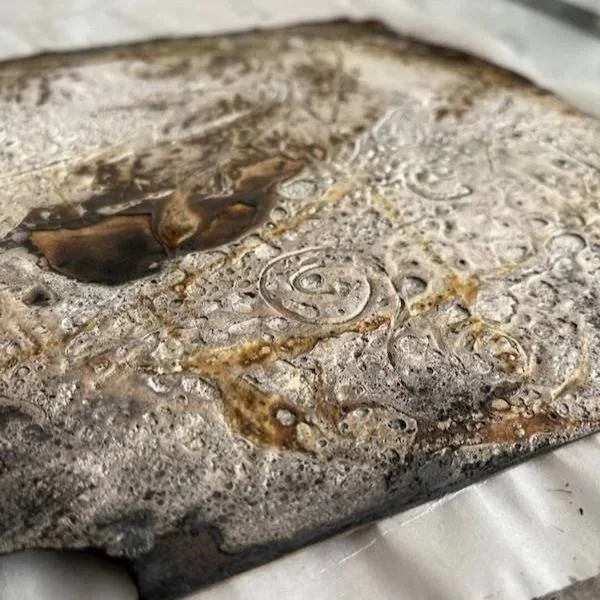
Scorched Collagraph plate
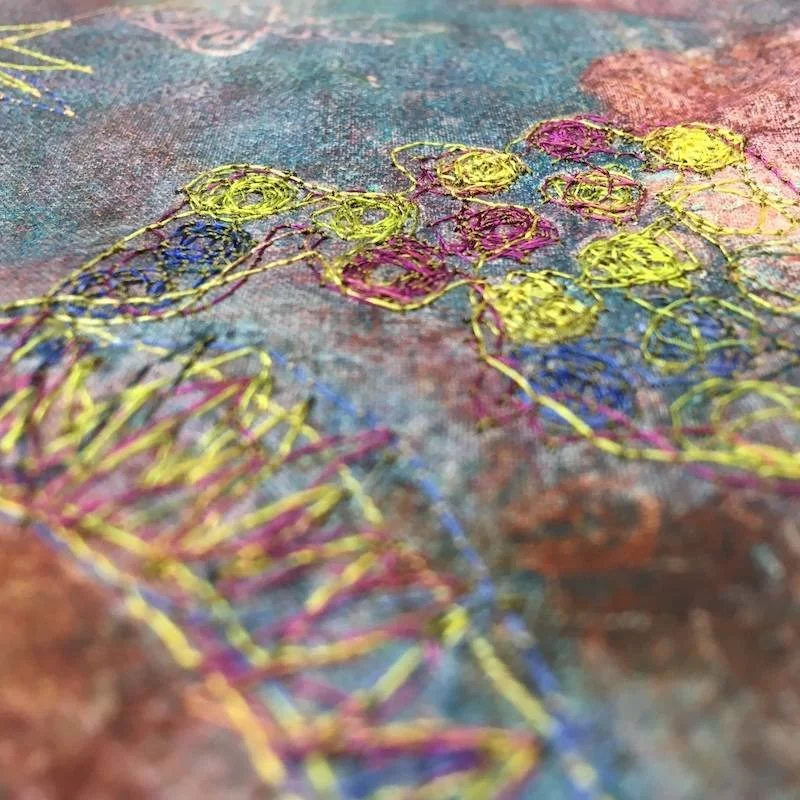
Free machine embroidery on gelli-plate printed fabric
The Studio
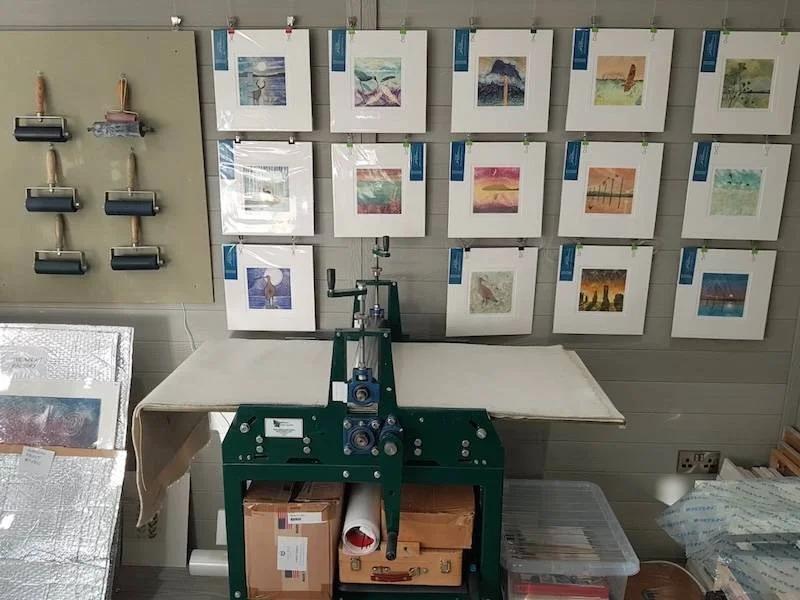
The studio is in my garden in Rothesay, overlooking the Pavilion and Rothesay Bay. It's equipped with a Hawthorn 545 etching press — press bed 74cm, comfortable up to A2 — along with professional brayers, a full set of Hawthorn Stay Open inks, and everything you need to work across multiple techniques.
Groups are a maximum of four, with three being the sweet spot. In practice, many of the retreats aimed at more experienced printmakers are one-to-one or two people, which means the conversation about the work can go as deep as it needs to.
That said, small groups of creative friends are very welcome — and often produce something quite special. During last year's Bute Studio Trail, I got talking to a visitor who was here with exactly this kind of group: writers, poets, visual artists, people who meet every year somewhere new and look for a creative experience they can share. They were immediately interested in the idea of a printmaking workshop that could accommodate different levels of experience — something that gives everyone a genuine foothold in the work regardless of where they're starting from. If that sounds like your group, it's absolutely something we can design around you.
I'm a working printmaker, not just a teacher. The studio is where my own prints get made, and I think that makes a difference — both to the quality of the teaching and to the feeling of the space.
The Island
Bute has been feeding into my own work since I arrived just over three years ago — the tidal light outside my window, the textures of ancient stone that lie or stand across the island, the particular quality of a West Highland seascape. It's the kind of place that gets into prints whether you plan it or not.
For experienced printmakers, the island offers something specific: a landscape with genuine visual complexity. The cup-marked stones scattered across Bute have been here for five thousand years, and carry a surface quality that translates almost directly into collagraph. The ruins at St. Blane's Chapel have a layered, atmospheric depth that feels almost ready-made for monotype. At Dunagoil, the rock face of the vitrified Iron Age fort is full of faces — I call them the guardians, and once you've seen them you can't unsee them. The seals basking on the rocks off Scalpsie Beach, the tidal patterns in the sand at St. Ninian's at the Straad, the bryophyte mosses of the temperate rainforest in the Bute Community Forest — over seventy identified species, each one a different texture — all of it is source material, if you want it to be.
A retreat can be structured entirely around studio time, or it can loop between the studio and the island — spending time out gathering reference and then bringing what you've found back to the press. Many people find that rhythm produces their most interesting work.
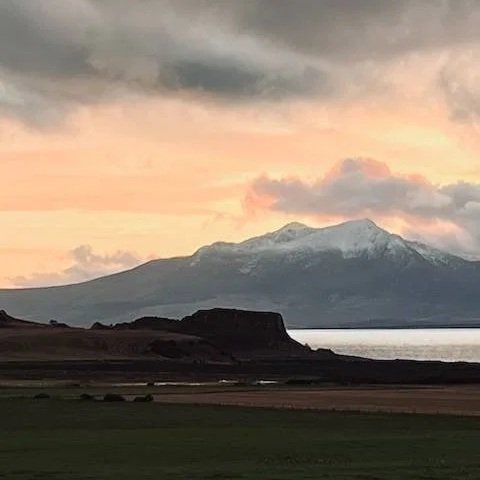
Dunagoil Vitrified Iron Age Fort Silhouetted Against Arran
How a Retreat Is Structured
This is the part that makes these retreats different from a standard workshop. There's no fixed syllabus, no group timetable, no sense that you need to keep up or slow down for anyone else.
Before you arrive, we'll have a conversation about what you want to achieve. I'll put together a loose programme — always with room to follow what's working and change course if something isn't. Some people come with a specific body of work they want to develop. Others come with a question they've been trying to answer in their practice for months. Both are completely valid starting points.
A typical structure might be one or two days of focused tuition, followed by time combining independent studio work with island exploration. But retreats have been as short as a single day and as long as a full week, and everything in between is possible.
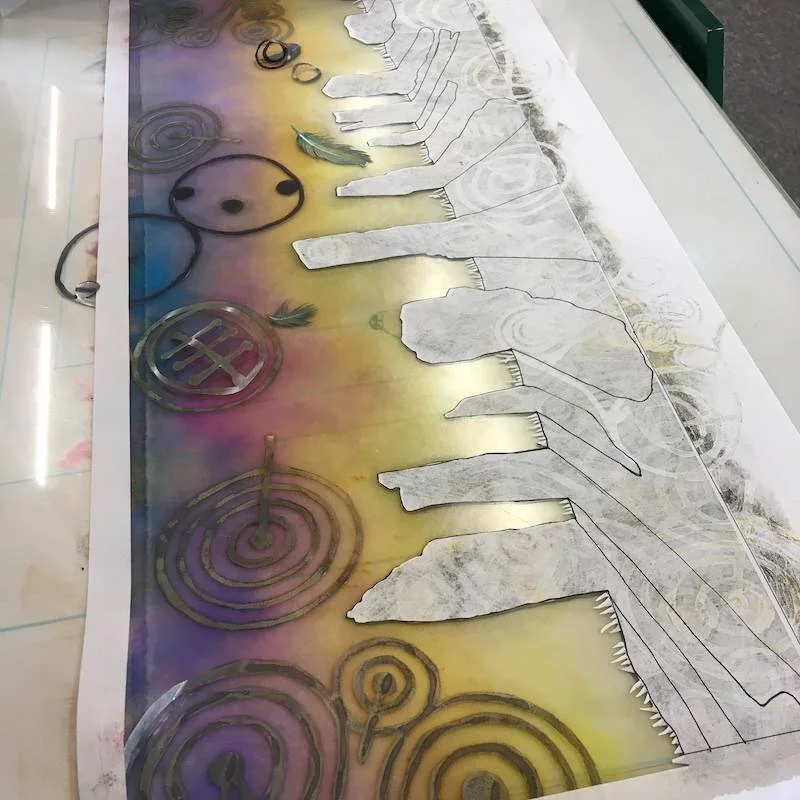
Early Stages of the Monotype Print ‘Sunrise On The Stones’
Practical Details
Tuition is £100 per person per day, with inks, cleaning materials, and a basic paper allowance (Fabriano Unica) included. I have other specialist printmaking heavier papers available including Somerset Satin, Fabriano Rosapina and BFK Rives. These can make a significant difference to collagraph results or the number of layers of ink in a monotype— they are available to purchase in the studio, or if you have specific papers you want to use you can either bring your own or I can order specific papers in advance.
Island guiding, if you'd like company exploring the locations, is £45 for a half day or £65 for a full day. Independent studio time with me available for occasional input is £25 per half day. Alternatively, I can point you in the direction of places you can visit on your own, depending on your fitness levels, the weather and your interests.
A two-day retreat comes to £200 per person. A four-day stay mixing tuition, island time and independent studio work typically falls between £285 and £340. A week-long stay runs from around £385 to £415, depending on how you structure it. At some point in the near future I may be able to offer accommodation to solo artists (and their partner).
Everything is arranged by conversation rather than online booking — send me an email with a rough outline of what you're looking for and we'll work out the details together.
Thinking About Next Year?
If the dates you'd like aren't available this year, or you're not quite ready to commit yet — it's worth thinking ahead. Retreat slots, particularly for summer and early autumn, tend to go once people discover they exist. International visitors especially often plan trips to Scotland well in advance, and building a printmaking retreat into a wider Scottish itinerary is very achievable — Bute is easily combined with touring the west coast, the western isles, and/or a few days in Glasgow or Edinburgh.
If you'd like to be among the first to hear about availability for 2026 and beyond, the best thing to do is join my mailing list. Subscribers get early access to new dates and a 10% early bird discount when they book.
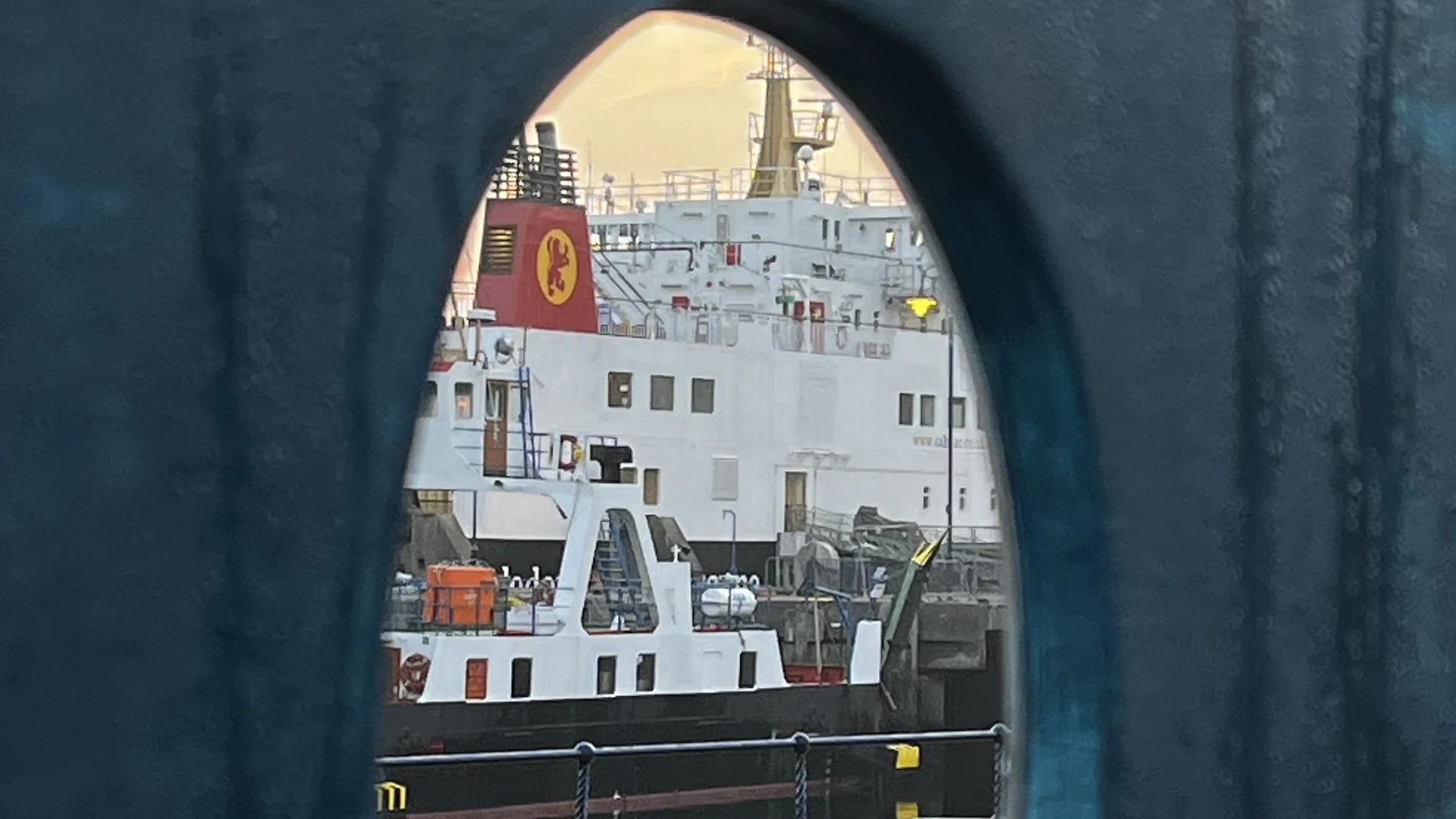
Rothesay Ferry Terminal
Get in Touch
If you're an experienced printmaker looking for a retreat that takes your practice seriously, I'd love to hear from you. Tell me a bit about where you are in your work, what you'd like to focus on, and when you're thinking of coming — and we'll go from there.